Governance and Risk Compliance for Small Engineering Firms
Governance and Risk Compliance for Small Engineering Firms
In Australia’s resource, energy, and infrastructure sectors, small engineering consultancies frequently operate under the same regulatory scrutiny as multinational Tier-1 operators. Asset owners in mining, oil and gas, utilities, and heavy manufacturing demand absolute technical integrity, verifiable safety in design, and unyielding statutory compliance from every tier of their supply chain. For a small engineering firm, Governance, Risk, and Compliance (GRC) is rarely just back-office administration. It is a commercial prerequisite, a legal safeguard, and the foundation of operational credibility.
The Australian Compliance Landscape: Beyond Basic Overhead
Operating an engineering consultancy in Australia requires navigating a dense statutory environment that directly penalises poor governance. Compliance is not confined to internal company operations; it extends directly to the technical deliverables handed over to clients. Under the harmonised Work Health and Safety (WHS) Acts and Western Australia’s WHS Act 2020, engineers who design plant, substances, or structures carry explicit primary duties of care as “designers”.
Failure to demonstrate rigorous Safety in Design (SiD) principles can expose directors and individual practitioners to significant liability. Furthermore, state-based statutory registration regimes—such as RPEQ in Queensland, the Professional Engineers Registration Act in Victoria, and schemes expanding across New South Wales, the ACT, and Western Australia—mean that sign-off authority requires verified professional competencies and strict adherence to codes of conduct. Small firms must build a GRC structure that directly reflects these statutory realities, ensuring engineering judgements are legally defensible and fully traceable.
Structuring a Scalable Technical Governance Framework
Small firms often falter by either over-engineering their compliance systems or relying on fragmented, ad-hoc documentation. An effective engineering governance model does not require an enterprise-scale compliance department; it requires disciplined, repeatable control gates embedded in the technical delivery workflow.
To establish a lean, robust governance architecture, focus on three foundational controls:
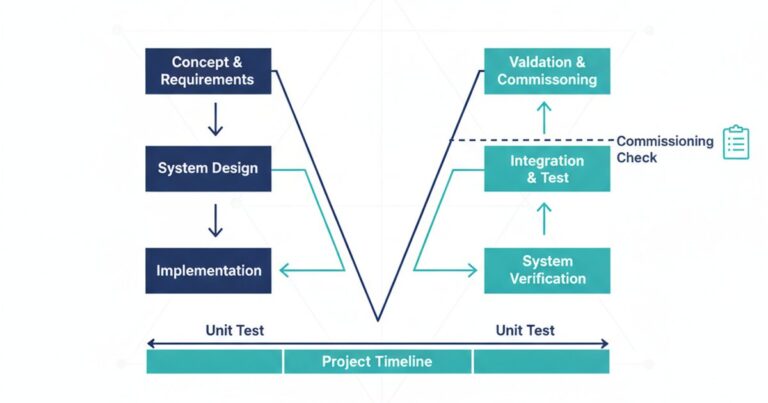
- Clear Design Verification and Sign-Off Hierarchies: Implement strict limits of authority (LOA). Non-registered engineers must not issue technical reports, calculations, or drawings without recorded review by a registered practitioner. Segregate the originator, checker, and approver roles clearly within every deliverable.
- Standardised Management of Change (MOC): Engineering risk escalates when project scopes deviate. A simplified MOC process must capture design alterations, assess downstream impacts on asset integrity, and document client approval before physical fabrication or execution occurs.
- Safety in Design Integration: Embed hazard identification (HAZID), Hazard and Operability studies (HAZOP), and Constructability, Operability, and Maintainability reviews into early project phases. Ensure the resulting hazard logs directly inform client asset manuals and commissioning plans.
Pragmatic Risk Management Aligned with ISO Standards
Clients in the resources and utilities sectors frequently require their delivery partners to demonstrate operational systems aligned with ISO 9001 (Quality Management), ISO 31000 (Risk Management), and ISO 45001 (Occupational Health and Safety). While third-party certification may be required for tender pre-qualification, the operational value lies in the practical mechanics of the system.
A small firm’s risk register should be dynamic, active, and reviewed fortnightly, rather than relegated to an annual audit file. Operational risk must be clearly decoupled from technical risk. While business risks evaluate client cash flow, capacity constraints, and professional indemnity coverage, technical risk assessments must systematically evaluate asset performance limits, environmental impacts, and catastrophic failure modes.
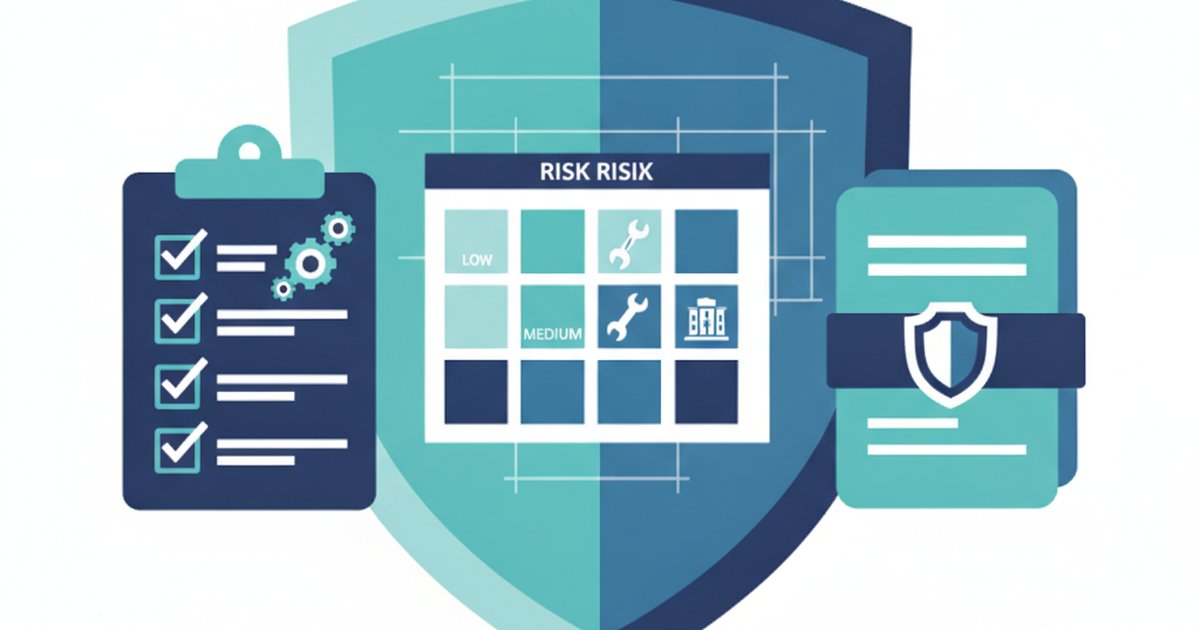
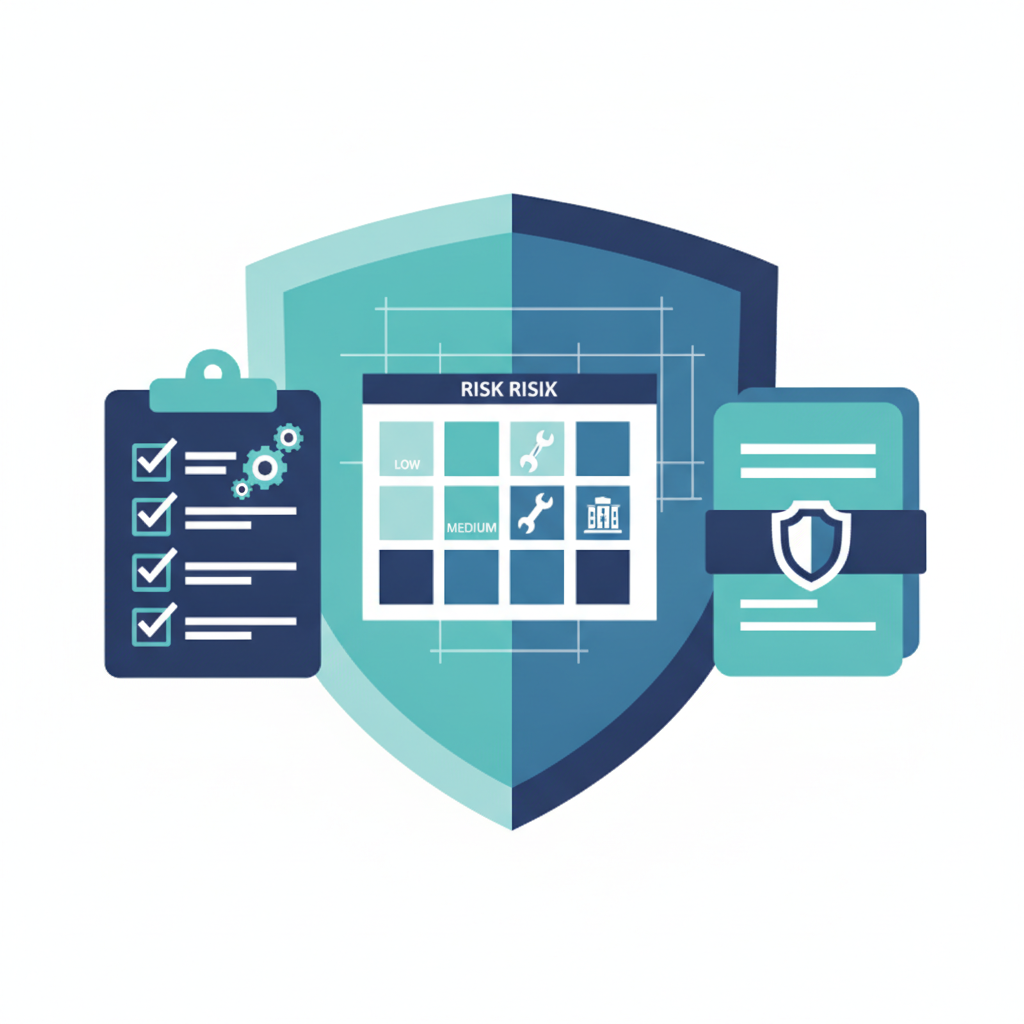
Standardise your risk criteria using a quantified risk matrix that mirrors your clients’ severity frameworks. Aligning your risk assessment terminology with the asset owner’s framework builds operational confidence and accelerates design approvals during project execution.
Audit-Proofing the Business for Client Pre-Qualification
Supplier onboarding portals such as Avetta, Pegasus, and Browz have moved compliance management from a subjective review to a rigid algorithmic metric. A single expired policy, lack of documented competency records, or poorly tracked incident register can freeze a small consultancy out of vendor panels.
To insulate your business against pre-qualification friction and client technical audits, maintain centralized, audit-ready digital registers for core operations:
- Competency and CPD Tracking: Maintain real-time records of engineering registrations, software proficiencies, site-specific inductions, and Continuing Professional Development (CPD) logs for all key personnel.
- Software Verification Logs: Modern design engineering relies heavily on computational modelling (FEA, CFD, structural analysis). Maintain documented validation logs proving that software tools are up-to-date, licenced, and benchmarked against standard analytical calculations.
- Document Control Protocols: Enforce strict metadata, versioning, and archiving conventions for all design packages, inspection reports, and calculations to ensure complete reconstructability in the event of an asset failure.
Driving Commercial Advantage Through Disciplined GRC
For small engineering consultancies, a disciplined GRC framework is not a bureaucratic burden—it is a competitive differentiator. Operational leaders and asset owners in Australia’s high-hazard industries will consistently choose specialist consultants who prove they can execute complex technical assignments without introducing statutory, safety, or legal vulnerability into their projects.
Review your firm’s current compliance and governance architecture to identify points of exposure before your clients do. Explore our full range of engineering services to see how we deliver compliant, high-integrity project outcomes, or contact our technical team directly to discuss your asset compliance requirements.